
Peter Obi Promises Bold Action Against Kidnapping, Says He Will Personally Join Rescue Operations if Elected in 2027

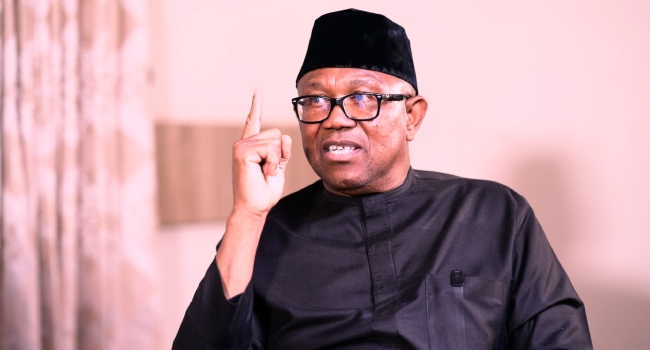
Peter Obi, a former governor of Anambra State and presidential hopeful ahead of the 2027 general election, has declared his determination to confront Nigeria’s growing insecurity, promising that his administration would take decisive action to rescue citizens abducted by criminal groups.
Obi made the declaration while discussing the security challenges facing the country, particularly the increasing incidents of kidnapping, attacks on communities and the fear experienced by families whose loved ones are taken by armed criminals.
The former governor said he would not be comfortable occupying the highest political office in the country while Nigerians continued to suffer from insecurity without a strong and coordinated response from the government.
According to him, leadership must involve taking responsibility for the safety of citizens and demonstrating a willingness to confront difficult situations rather than leaving communities to deal with the consequences of criminal activities on their own.
Obi reportedly expressed his readiness to personally enter the bush alongside security operatives if necessary to ensure the safe return of kidnapped Nigerians, stressing that the government must show determination in dealing with those responsible for abductions.
His declaration comes at a time when insecurity remains one of the major concerns among Nigerians, with many communities demanding stronger protection, improved intelligence gathering and a more effective response to criminal activities.
The presidential hopeful argued that the responsibility of securing the country should not be treated as an ordinary political promise but as a fundamental duty of whoever occupies the presidency.
He maintained that Nigerians deserved a government that would respond urgently whenever citizens were threatened, particularly in situations involving the abduction of children, students, workers and other vulnerable members of society.
Obi’s comments have also brought renewed attention to the debate surrounding the role of political leadership in addressing the country’s security problems.
For many Nigerians, kidnapping has become a source of serious concern because of the emotional, financial and psychological consequences it creates for victims and their families.
Families of abducted persons frequently face uncertainty while attempting to secure the release of their loved ones, with some struggling to raise money and obtain assistance during difficult circumstances.
Communities affected by repeated attacks have also expressed concerns about their ability to carry on with normal activities, particularly when residents fear being kidnapped while travelling, farming or attending school.
Obi said the government must demonstrate that it understands the suffering of ordinary Nigerians and is prepared to take responsibility for protecting them.
He stressed that the safety of citizens should remain a central consideration in government decisions and that security agencies must receive the support necessary to carry out their responsibilities effectively.
The former governor’s proposed approach also raises questions about how a future administration would coordinate intelligence gathering, military operations, police activities and other security measures to prevent kidnappings and rescue victims.
Nigeria’s security challenges involve several criminal groups operating in different parts of the country, making the protection of communities and the rescue of abducted persons a complicated task.
Security experts have frequently emphasised the importance of reliable intelligence, cooperation between security agencies, community participation and the availability of resources in tackling criminal activities.
The effective use of technology, improved communication and timely information sharing are also important elements in efforts to identify criminal networks and respond to emergencies.
Obi’s declaration suggests that he wants to present himself as a leader who would remain actively involved in addressing security problems rather than treating them as issues that can be handled without direct presidential attention.
He has also argued that the government must be accountable to citizens and that public office should be used to improve the living conditions of Nigerians.
The former Anambra governor’s comments are expected to feature in the wider political discussions ahead of the 2027 presidential election, as candidates and political parties continue to present their ideas for addressing insecurity and other national challenges.
Kidnapping has remained a significant concern for families, businesses, schools and communities, with the threat affecting people’s freedom of movement and confidence in public safety.
Parents are particularly concerned about the safety of children and students, while residents of affected communities often demand stronger security presence and quicker responses to threats.
Obi’s promise to personally participate in rescue efforts has therefore drawn attention to the question of how far political leaders should go in demonstrating their commitment to protecting citizens.
However, any rescue operation involving armed criminal groups requires careful coordination with trained security personnel to protect abducted victims, officers and other civilians.
The president’s responsibility would include ensuring that security agencies operate effectively, that their activities are properly coordinated and that rescue efforts are carried out with the safety of victims in mind.
Obi has maintained that Nigeria needs leadership that places the welfare of its people at the centre of governance.
His comments also reflect the growing importance of security in the political conversation ahead of the next presidential election, with Nigerians expected to scrutinise candidates’ proposals for protecting lives and addressing criminal activities.
As the 2027 election approaches, the former governor’s promise has added another dimension to discussions about the country’s future security direction.
Whether through improved intelligence, stronger security institutions, community cooperation or direct presidential involvement, the challenge facing any future administration will be to translate political promises into measurable improvements in the safety of Nigerians.
Obi’s declaration that he would personally join efforts to rescue kidnapped citizens underscores the urgency he attaches to the issue and his stated determination to make security a central responsibility of his proposed administration.