
US Withdraws Troops from Nigeria Following Completion of Counterterrorism Mission

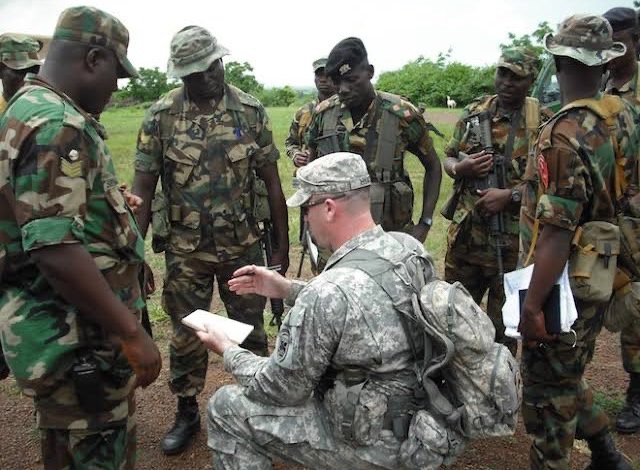
The United States has withdrawn its military personnel from Nigeria following the successful completion of a counterterrorism mission conducted in partnership with Nigerian security forces, marking the end of a significant phase in bilateral military cooperation aimed at combating extremist threats in West Africa.
The withdrawal comes after months of coordinated operations focused on intelligence gathering, surveillance, operational planning, and support for Nigerian troops engaged in the fight against terrorist organizations operating in the Lake Chad Basin and other parts of northeastern Nigeria.
Although the deployment has officially concluded, American and Nigerian officials have emphasized that the withdrawal does not signify an end to security cooperation between the two countries. Instead, both governments have reaffirmed their commitment to maintaining a strong strategic partnership through intelligence sharing, military training, technical assistance, and joint security initiatives.
According to United States military officials, the mission was designed to strengthen Nigeria’s capacity to combat insurgent groups by providing specialized expertise, advanced surveillance capabilities, and operational support rather than engaging in direct combat operations.
The American personnel worked closely with members of the Nigerian Armed Forces, helping improve intelligence coordination and strengthen the planning of counterterrorism operations in areas where extremist groups continue to pose significant security threats.
Military officials explained that the deployment formed part of broader efforts by the United States to support African partners in addressing terrorism and violent extremism while encouraging local security forces to take the lead in defending their territories.
Unlike large-scale foreign military interventions of previous decades, the operation reflected Washington’s evolving security strategy, which places greater emphasis on supporting partner nations through advisory roles, intelligence cooperation, and capacity building rather than maintaining long-term troop deployments.
Officials familiar with the mission stated that the operation achieved its immediate objectives, leading to the decision to redeploy the American personnel after completing their assignment.
Despite the withdrawal, United States officials stressed that collaboration with Nigeria remains one of the country’s most important security partnerships in Africa.
The two nations are expected to continue exchanging intelligence on terrorist movements, financing networks, and cross-border criminal activities that threaten regional stability.
Security experts note that intelligence sharing has become one of the most effective tools in modern counterterrorism operations.
Access to satellite imagery, aerial surveillance, electronic intelligence, and real-time information enables security agencies to identify threats more quickly, disrupt planned attacks, and coordinate military responses with greater precision.
Analysts believe that this form of cooperation will continue to play a vital role in Nigeria’s efforts to confront insurgent groups that remain active in parts of the northeast and the wider Lake Chad region.
The Lake Chad Basin has long remained one of Africa’s most challenging security environments.
The region, which borders Nigeria, Niger, Chad, and Cameroon, has witnessed years of insurgency, armed attacks, kidnappings, and humanitarian crises caused by extremist organizations operating across porous international borders.
These security challenges have displaced millions of people, disrupted economic activities, and placed enormous pressure on governments within the region.
Because terrorist groups often move freely across national boundaries, international cooperation has increasingly become essential in addressing the threat.
Nigeria has worked closely with neighboring countries through the Multinational Joint Task Force (MNJTF), while also receiving varying levels of support from international partners, including the United States, the United Kingdom, France, and other allied nations.
Observers say the latest withdrawal reflects growing confidence in the capabilities of Nigerian security forces to assume greater responsibility for ongoing operations.
Over recent years, the Nigerian military has continued investing in training, intelligence capabilities, equipment modernization, and joint regional operations aimed at weakening terrorist networks.
Although security challenges persist, officials believe improved coordination among security agencies has contributed to several operational successes against insurgent groups.
Foreign policy analysts argue that the withdrawal should not be interpreted as a reduction in American interest in Nigeria’s security.
Instead, they describe it as a transition from direct operational support to a more sustainable model centered on partnership, intelligence cooperation, and institutional capacity building.
This approach allows local forces to retain operational leadership while benefiting from the technological expertise and strategic resources available through international collaboration.
Military experts also note that many countries now prefer this model because it strengthens national institutions rather than creating long-term dependence on foreign military presence.
The continued exchange of intelligence, specialized training, cybersecurity support, and counterterrorism expertise is expected to remain central to the relationship between both countries.
Beyond military cooperation, analysts believe regional security remains closely linked to broader issues such as economic development, youth unemployment, governance, education, and humanitarian assistance.
They argue that while military operations are necessary to disrupt terrorist activities, long-term peace will also depend on addressing the underlying conditions that extremist groups often exploit to recruit new members.
Community development, infrastructure investment, education, and job creation are increasingly viewed as essential components of comprehensive counterterrorism strategies.
Meanwhile, diplomatic relations between Nigeria and the United States continue to extend beyond security cooperation.
Both countries maintain partnerships in trade, healthcare, education, technology, democratic governance, and economic development, reflecting decades of strategic engagement across multiple sectors.
Government officials from both nations have reiterated their shared commitment to promoting peace, stability, and prosperity throughout West Africa.
As extremist threats continue to evolve, both governments acknowledge that sustained international cooperation will remain necessary to confront emerging security challenges effectively.
For Nigeria, the conclusion of the latest American deployment represents both the end of a successful joint mission and the beginning of another phase in its ongoing fight against terrorism.
While US troops have returned home, the strategic partnership between Washington and Abuja remains firmly in place, with intelligence sharing, military collaboration, and joint security planning expected to continue in support of regional peace and stability.
The development underscores the changing nature of modern military partnerships—where long-term success is increasingly measured not by the size of foreign deployments but by the strength of cooperation, institutional capacity, and the ability of partner nations to independently safeguard their security while maintaining strong international alliances.