Atiku Fires Back at Critics Over Age, Says He Still Has What It Takes to Lead Nigeria

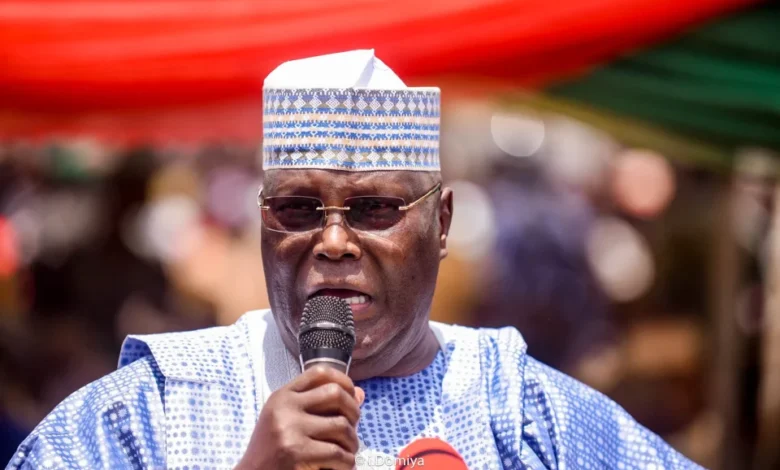
Former Vice President Atiku Abubakar has responded to renewed questions about his age and suitability for the 2027 presidential race, dismissing concerns about his age and challenging those questioning his physical fitness.
The former vice president’s response has added fresh drama to the growing political debate over age, experience and leadership ahead of the 2027 general elections.
Atiku, who has remained one of the major figures in Nigeria’s opposition politics, has continued to maintain an active political schedule despite being in his late seventies.
The discussion over his age has become increasingly prominent as political parties and potential presidential candidates position themselves for the next election.
Atiku was born on November 25, 1946, making him 79 years old in 2026. His age has consequently become a frequent subject of public discussion whenever his presidential ambition is mentioned.
Responding to the concerns, Atiku questioned whether his appearance and level of activity suggested that he was already 80 years old.
His comment was interpreted as a direct challenge to those who believe that advanced age should disqualify him from seeking the presidency.
The debate over age has remained one of the recurring issues surrounding Atiku’s political career.
He contested the presidency several times and was the presidential candidate of the Peoples Democratic Party (PDP) in the 2019 and 2023 elections.
His continued interest in the presidency has ensured that questions about his age and experience remain part of political discussions.
Supporters argue that his decades of experience in government and politics provide an advantage, particularly at a time when Nigeria faces complex economic and security challenges.
They also point to his experience as vice president between 1999 and 2007 and his extensive knowledge of the country’s political system.
Critics, however, believe that Nigeria needs younger leadership and argue that political power should gradually move to a new generation.
The age debate is not limited to Atiku.
Several of Nigeria’s most prominent political figures belong to older generations, while younger politicians and activists have increasingly called for greater generational representation in government.
This has created a broader national conversation about whether political leadership should be determined primarily by age or by competence, experience, health and the ability to perform the responsibilities of office.
Atiku’s latest response appears to place greater emphasis on his capacity rather than his numerical age.
For his supporters, the argument is that age alone does not determine a person’s ability to lead.
They contend that experience accumulated over several decades can be valuable in managing a country as politically and economically complex as Nigeria.
Opponents of older presidential candidates counter that the demands of the presidency require enormous physical and mental energy and that younger leaders may be better positioned to meet those demands.
The disagreement is expected to become even more intense as the 2027 election approaches.
Atiku remains involved in discussions about opposition politics and possible alliances ahead of the election.
His political activities have also placed him at the centre of conversations about the future of the PDP and efforts to challenge the ruling All Progressives Congress.
The former vice president has repeatedly been associated with attempts to bring opposition politicians together around a common platform.
The emergence of new political alliances has also increased speculation about which experienced politicians will contest and which may step aside.
Atiku’s position on his age suggests that he remains confident about his ability to participate actively in the political process.
The comment has also generated reactions among Nigerians, with social media users offering different opinions about whether age should influence voters’ decisions.
Some have argued that voters should focus on a candidate’s policies, competence and record rather than simply the year in which the person was born.
Others believe that generational change is necessary and that Nigeria’s political leadership should create more room for younger candidates.
The debate is likely to remain a major issue throughout the build-up to 2027.
For Atiku, the challenge will be convincing voters that his experience can translate into effective leadership while addressing concerns about age and the physical demands of the presidency.
His supporters are expected to continue highlighting his experience in public service and business, while critics will continue pushing for younger alternatives.
As political activities gather momentum, Atiku’s response has ensured that the question of age remains firmly within the national conversation.
The 2027 presidential contest is expected to be closely fought, and issues surrounding experience, age, generational representation and leadership capacity will likely influence how voters assess the major contenders.
For now, Atiku appears unwilling to allow questions about his age to overshadow his political ambitions, challenging Nigerians to look beyond the number and consider his capacity to lead.