2027: SDP’s Adewole Adebayo Promises Solar Power for Every Nigerian Home Within 11 Months

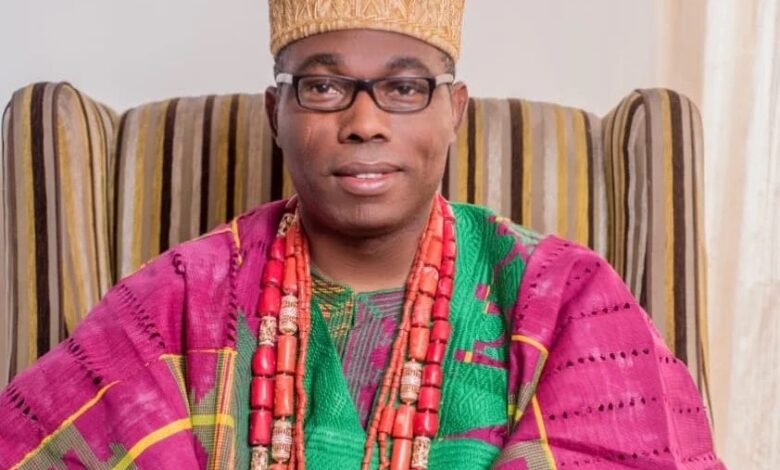
The presidential candidate of the Social Democratic Party, Adewole Adebayo, has unveiled an ambitious electricity plan ahead of the 2027 presidential election, promising to deploy solar power systems across Nigerian homes within the first 11 months of his administration if elected.
Adebayo said his proposed energy programme would involve installing between 11 and 15 kilowatts of solar capacity on every roof in the country, describing the initiative as part of a wider strategy to end Nigeria’s persistent electricity crisis while creating millions of economic opportunities.
The SDP candidate made the pledge while presenting his party’s policy blueprint, which focuses on poverty reduction, employment, infrastructure, agriculture, healthcare, education, energy and national security.
He argued that Nigeria’s electricity problem requires a fundamental change in the way government approaches power generation and distribution, insisting that electricity should not be treated simply as a service delivered through the existing centralised system.
Instead, he proposed a decentralised approach that would place significant power-generating capacity closer to households and communities.
Under the plan, homes would be equipped with solar systems capable of supplying enough electricity for basic household activities, including lighting, charging electronic devices, ironing clothes and operating other essential appliances.
Adebayo said the proposed installation of solar systems would also serve as an employment programme because large numbers of Nigerians would be required to manufacture, distribute, install, maintain and service the equipment.
He argued that the financial resources committed to solving Nigeria’s electricity challenges should be viewed not only as expenditure but also as an opportunity to stimulate economic activity and create jobs.
The SDP candidate projected that the network of solar installations could generate as much as 32,000 megawatts of electricity when combined across households and communities.
The promise forms part of Adebayo’s broader argument that Nigeria can tackle several of its biggest problems simultaneously by making strategic investments in public infrastructure and human capital.
Rather than focusing exclusively on direct cash support or short-term interventions, he said his administration would concentrate on building systems capable of reducing the underlying causes of poverty.
Education would be one of the central pillars of the proposed programme.
Adebayo said children of school age should be guaranteed access to education, arguing that keeping young Nigerians in school would provide one of the fastest routes out of poverty.
He also linked the education programme to job creation, noting that putting millions of children into school would require teachers, administrators and other workers.
Healthcare would similarly be treated as a basic social service under his proposed administration.
The SDP candidate said Nigerians should not be pushed into poverty because they cannot afford medical treatment and argued that government spending should be structured to ensure citizens can access essential healthcare without catastrophic financial consequences.
He also proposed greater investment in agriculture as part of efforts to improve food security and reduce unemployment.
According to his policy argument, Nigeria possesses enough agricultural potential to produce food for its population if farmers are provided with adequate inputs, infrastructure and support.
He pointed to states including Kaduna, Nasarawa and Benue as examples of areas with the agricultural capacity to contribute significantly to national food production.
The proposed energy programme is therefore being presented as one component of a much larger economic plan rather than a standalone electricity project.
Adebayo said his administration would pursue a mixed-economy model in which government and private businesses would both play significant roles in economic development.
He rejected the idea that government should completely withdraw from job creation, arguing that strategic public investment can generate employment while also creating opportunities for private-sector businesses.
Agriculture, energy, manufacturing and other productive sectors would receive government investment under the plan.
He also linked the financing of his proposed programmes to the recovery of public resources that he said were being lost through corruption and crude oil theft.
Adebayo argued that reducing leakages in the oil sector could increase government revenue without necessarily imposing additional financial burdens on citizens.
He has repeatedly framed the SDP’s 2027 campaign around what he describes as a comprehensive alternative to Nigeria’s current approach to governance.
The party’s policy document, titled Farewell to Poverty and Insecurity, outlines its proposed strategy for dealing with the country’s economic and security challenges.
Adebayo has said the blueprint is designed to comply with constitutional requirements for political party manifestos and is intended to provide detailed solutions rather than broad campaign slogans.
He also promised that the SDP would produce additional policy documents addressing specific sectors of the Nigerian economy.
One of his broader targets is the elimination of poverty within four years if the party wins the 2027 presidential election.
He clarified that the objective does not mean every Nigerian would become wealthy, but rather that citizens should have access to basic necessities such as food, housing, healthcare and education.
He also said the administration would pursue policies aimed at reducing unemployment to between two and three per cent.
The proposed solar programme is expected to play a role in that employment strategy because of the large workforce that would be required to install and maintain millions of solar systems across the country.
Such a programme would require technicians, engineers, electricians, installers, manufacturers, logistics companies and maintenance workers.
It could also create opportunities for local businesses involved in the production and assembly of solar equipment.
Nigeria’s electricity crisis has remained one of the country’s most persistent development challenges, affecting households, businesses, hospitals, schools and factories.
Frequent power shortages have forced millions of Nigerians to depend on petrol and diesel generators, increasing the cost of running businesses and placing additional financial pressure on households.
Manufacturers have repeatedly complained about the high cost of alternative energy, while small businesses often spend a significant portion of their income on fuel and generator maintenance.
Adebayo’s proposal is therefore aimed at addressing both the availability and cost of electricity.
The SDP candidate believes that expanding decentralised renewable energy could reduce dependence on the national grid while giving households greater control over their electricity supply.
However, the scale of the promise means its implementation would require enormous financing, logistics, technical capacity and coordination.
Installing solar systems on every Nigerian roof within 11 months would involve an unprecedented nationwide deployment programme, making questions about procurement, manufacturing capacity, installation personnel, maintenance and funding central to the feasibility of the proposal.
The exact cost of the proposed programme and how it would be financed have not been fully detailed in the remarks surrounding the pledge.
The proposal nevertheless represents one of the most ambitious electricity commitments to emerge from the 2027 presidential campaign so far.
Adebayo has presented the plan as evidence of his argument that Nigeria’s biggest problems can be tackled through coordinated investment rather than isolated government interventions.
He believes the same public spending used to address infrastructure deficits can simultaneously create jobs and stimulate economic activity.
His approach extends beyond electricity to education, healthcare, agriculture, manufacturing and social services.
On security, the SDP candidate has also promised to tackle insecurity within his proposed four-year administration.
He has argued that poverty and insecurity are interconnected and that improving economic opportunities could help address some of the conditions that allow criminal activity to thrive.
The party is seeking to position itself as an alternative to the major political blocs ahead of the 2027 election.
Adebayo has expressed confidence that the SDP can win enough seats in the National Assembly to support its proposed reforms if Nigerians embrace the party’s programme.
He pointed to the party’s previous experience of producing lawmakers at both the Senate and House of Representatives levels as evidence that it has an existing political structure capable of competing in elections.
He has also sought to distinguish his campaign from conventional political competition by emphasising policy and what he describes as intellectual capacity.
According to his argument, the objective of the SDP should not simply be to take control of government but to develop a national philosophy capable of producing measurable improvements in citizens’ lives.
The proposed solar initiative is consequently being presented as part of that philosophy.
Rather than waiting for the national electricity grid to provide uninterrupted power to every community, the plan would attempt to put generating capacity directly in homes and local clusters.
If successfully implemented, such a model could significantly change the way electricity is consumed in Nigeria.
But the ambitious timeline means the proposal is likely to face intense scrutiny during the election campaign.
Voters will want to know how many solar systems would be installed, how the equipment would be sourced, how households would qualify, who would maintain the systems and how the government would finance such a massive programme.
Questions would also arise about households without suitable roofs, apartment buildings, rented properties and communities where solar installations may require shared rather than individual systems.
These practical issues would need to be addressed before the programme could become a nationwide policy.
For now, Adebayo is using the proposal to demonstrate what he believes a more aggressive approach to Nigeria’s energy crisis should look like.
His promise to install 11 to 15 kilowatts of solar capacity on every roof within 11 months has already placed electricity at the centre of his 2027 campaign message.
As the election approaches, the proposal is likely to attract both support from Nigerians desperate for reliable power and questions from critics who will demand clearer details about its cost, implementation and technical feasibility.
For millions of Nigerians who have spent years relying on generators because of unreliable public electricity, the promise addresses one of the most immediate problems affecting household finances and business operations.
Whether the ambitious target can be achieved within the proposed timeframe, however, would ultimately depend on the resources available to any government that assumes office in 2027 and its ability to translate the campaign pledge into a workable nationwide programme.
For Adebayo and the SDP, the solar proposal is more than an electricity policy. It is a central part of their argument that government investment can simultaneously improve living standards, reduce poverty, expand access to essential services and create employment.
The 2027 election will give voters the opportunity to assess that proposal alongside the competing economic and energy plans of other presidential candidates.