
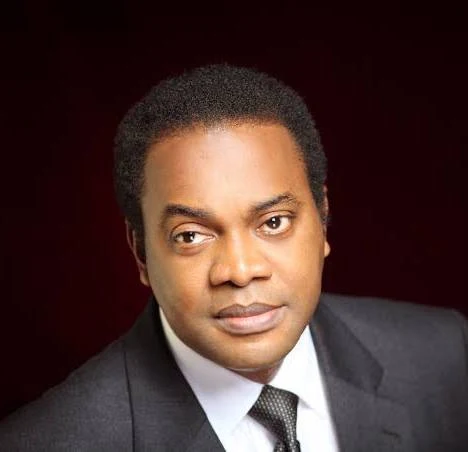
Former Cross River State Governor Donald Duke has recounted a striking episode involving former military Head of State Ibrahim Badamasi Babangida, former President Olusegun Obasanjo and former Vice President Atiku Abubakar during the political tensions surrounding the 2003 presidential election.
Duke said Babangida privately warned Obasanjo about his then-deputy, Atiku, during a period when the relationship between the president and vice-president was becoming increasingly strained.
According to Duke’s account, the warning came at a time when political disagreements within the Peoples Democratic Party were intensifying ahead of the 2003 election.
The former governor recalled that several PDP governors had become concerned about the political situation surrounding Obasanjo’s second-term bid. He said about 10 governors, including himself, met with the party’s leadership to discuss the possibility of replacing Atiku as Obasanjo’s running mate.
The development reportedly caused considerable tension within the presidency.
Duke recalled that Obasanjo was unhappy about the situation and contacted him after the governors’ discussions.
He said the former president expressed concern about what he considered a betrayal by his deputy.
The disagreement eventually led to a meeting involving Obasanjo, Atiku, Babangida and former military Head of State Abdulsalami Abubakar at the Presidential Villa in Abuja.
The meeting was reportedly intended to address the growing disagreement and explore a possible political solution.
Duke said Babangida reminded Obasanjo of earlier political understandings and the difficulties that could arise if influential political interests in the North withdrew their support.
The discussions reportedly focused on Obasanjo’s second-term ambition and the political alliances that would be necessary to secure victory.
Atiku’s position within the political structure was also a major issue.
As vice-president, Atiku was not only Obasanjo’s deputy but also an influential politician with his own political network and ambitions.
The relationship between the two men had therefore become increasingly complicated as the 2003 election approached.
Duke said the most revealing part of the encounter occurred after the main discussion had apparently ended.
According to his recollection, Babangida told Obasanjo that he had forgotten his keys inside the president’s private study.
The two men reportedly went back into the room, creating an opportunity for a private conversation away from the other political figures present.
It was during that moment, Duke said, that Babangida reminded Obasanjo of a previous warning concerning Atiku.
He reportedly told Obasanjo that he had earlier warned him not to place complete trust in his deputy.
The conversation then reportedly took an even more striking turn.
Duke recalled Babangida looking towards Atiku and making a blunt assessment of his political prospects.
The former military leader was said to have told Obasanjo:
“This one cannot rule Nigeria.”
The statement, if accurately recalled, reflected the depth of the political calculations and distrust surrounding the relationship between the president and his deputy at the time.
The episode is particularly significant because Atiku would later become one of Nigeria’s most persistent presidential contenders.
The Obasanjo-Atiku Relationship
Obasanjo and Atiku served together as president and vice-president from 1999 to 2007.
Their partnership was an important part of the political transition that followed decades of military rule.
However, the relationship eventually deteriorated.
The disagreements between them became increasingly visible as political ambitions and questions surrounding succession emerged.
Atiku had considerable political influence and was regarded as an important figure within the PDP.
Obasanjo, meanwhile, was seeking to consolidate his administration and secure a second term in office.
The competing interests created tensions that eventually spilled into the open.
Their political relationship would later become one of the most discussed partnerships in Nigeria’s Fourth Republic.
Political Ambition and Succession
The events surrounding the 2003 election demonstrated how quickly political alliances can become complicated when questions of succession arise.
Atiku was already a powerful political figure and had a significant following within the party.
As the administration progressed, questions naturally emerged about his future political ambitions.
Obasanjo’s second-term plans further complicated the situation.
The disagreement was not simply about who would serve as vice-president.
It was also about political influence, party control and the direction Nigeria’s leadership would eventually take.
Duke’s account provides another perspective on the internal discussions taking place during that period.
It also illustrates how political negotiations often extend beyond formal party meetings and public statements.
Important decisions can be influenced by private conversations among powerful political figures.
IBB’s Influence
Babangida remained an influential political figure long after leaving office.
Although he had handed over power years earlier, his views continued to attract the attention of politicians seeking alliances and political guidance.
His alleged warning to Obasanjo about Atiku therefore carried considerable weight within the political environment of the time.
Abdulsalami Abubakar was also present during the discussions, adding another important former military leader to the meeting.
Both Babangida and Abdulsalami had played major roles in Nigeria’s transition from military to civilian government.
Their involvement reflected the influence that former military leaders continued to have on political developments during the early years of the Fourth Republic.
Duke’s Own Political Journey
Donald Duke was governor of Cross River State from 1999 to 2007 and later became a presidential candidate himself.
His experience within the PDP gave him a close view of the internal political struggles of the period.
His recollection of the Obasanjo-Atiku dispute therefore offers insight into the political atmosphere that existed inside the party during the early years of civilian rule.
Duke has remained active in public discussions about Nigerian politics and governance.
His latest account has brought renewed attention to events that occurred more than two decades ago.
Atiku’s Political Career After 2003
Despite the warning attributed to Babangida, Atiku continued to play a major role in Nigerian politics.
After leaving office as vice-president in 2007, he remained politically active and later contested the presidency several times.
His presidential campaigns have made him one of the most recognisable opposition figures in the country.
He contested the 2019 presidential election and again ran for president in 2023.
His continued political relevance has ensured that his relationship with former political allies remains a subject of public discussion.
The latest revelation is particularly notable because Nigeria is again approaching another major electoral cycle.
With political parties and opposition groups preparing for the 2027 election, Atiku’s political future has once again become a subject of national debate.
Lessons From the Past
The story also highlights the unpredictable nature of political alliances.
Politicians who work closely together at one stage can eventually become rivals when their interests diverge.
The relationship between Obasanjo and Atiku demonstrates this clearly.
The two men began their administration as political partners but later developed serious disagreements.
Their political differences eventually became part of the broader history of Nigeria’s Fourth Republic.
For political observers, Duke’s account is a reminder that the tensions surrounding political leadership are rarely limited to public speeches and campaign rallies.
Behind major political decisions are often negotiations involving alliances, personal relationships and competing ambitions.
The 2003 experience also demonstrates how important political calculations can become during presidential elections.
Candidates require support from different regions, political structures and influential individuals.
A disagreement involving one major political figure can therefore have consequences far beyond the individuals involved.
The 2027 Connection
Duke’s recollection has emerged at a time when Atiku remains involved in opposition politics and the country is gradually moving towards another presidential election.
Political alliances are already being discussed, while opposition figures are exploring ways to challenge the ruling party.
Atiku’s experience, including his long relationship with the PDP and his previous presidential campaigns, remains an important part of those conversations.
The political environment is different from that of 2003, but questions about alliances, trust and leadership remain just as relevant.
The story of the Obasanjo-Atiku relationship could therefore continue to attract attention as politicians and voters assess the personalities seeking influence ahead of 2027.
Duke’s account ultimately provides a glimpse into a dramatic period in Nigeria’s political history.
The alleged private warning from Babangida to Obasanjo, particularly the blunt statement that “This one cannot rule Nigeria,” offers a striking reminder of the political calculations that shaped the early years of democratic government.
More than two decades later, Atiku remains a major political figure, while the events surrounding his relationship with Obasanjo continue to provide lessons about power, ambition, loyalty and the unpredictable nature of political alliances in Nigeria.