
Sowore’s AAC Takes Tinubu’s Vacation to Court, Seeks Clarification on National Assembly’s Role

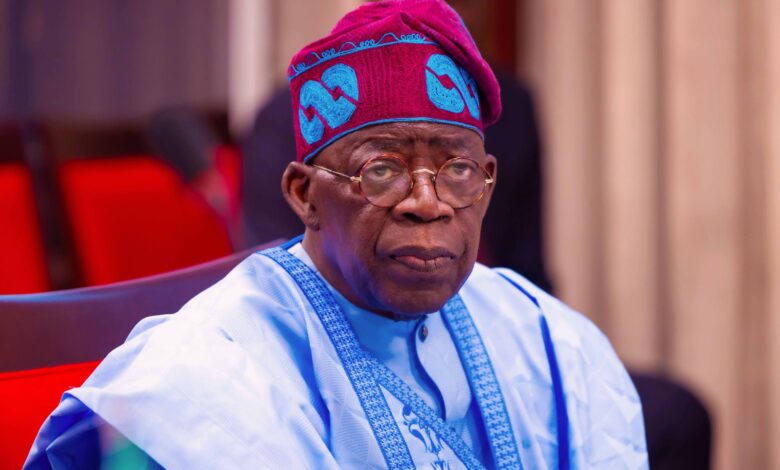
The African Action Congress has approached the Federal High Court in Abuja over President Bola Ahmed Tinubu’s prolonged stay outside Nigeria, asking the court to determine the constitutional requirements governing presidential vacations and the role of the National Assembly when the President remains abroad for more than 21 days.
The opposition party is challenging what it describes as the President’s failure to transmit a written declaration to the leadership of the National Assembly before embarking on his latest vacation in Europe.
The suit also questions whether the National Assembly was required to take further constitutional steps after the President’s absence exceeded the 21-day period referenced in Section 145 of the 1999 Constitution.
The case was filed on September 28, 2026, through an originating summons by AAC National Legal Adviser and human rights lawyer, Inibehe Effiong.
President Tinubu, Attorney-General of the Federation and Minister of Justice Lateef Fagbemi, Senate President Godswill Akpabio, Speaker of the House of Representatives Tajudeen Abbas and the National Assembly were listed as defendants in the case.
The AAC’s 2027 presidential candidate, Omoyele Sowore, was also present at the Federal High Court when the case was filed.
The party is asking the court to interpret Section 145(1) and determine whether a President who proceeds on vacation is constitutionally required to transmit a written declaration to the Senate President and the Speaker of the House before leaving the country.
The provision deals with situations in which the President is unable to perform the functions of his office and provides a constitutional mechanism through which the Vice-President can perform those functions as Acting President.
The AAC contends that the requirement applies to presidential vacations and argues that the President should not be able to remain abroad without complying with the procedure set out in the Constitution.
The party is also challenging what it describes as the failure of the National Assembly to act after the President’s absence went beyond 21 days.
It wants the court to determine whether the Senate and House of Representatives were required to pass a resolution authorising Vice-President Kashim Shettima to perform the functions of President as Acting President after the specified period.
According to the party’s case, the constitutional provision should not be treated as optional where the conditions contemplated by Section 145 arise.
The controversy followed President Tinubu’s departure from Nigeria on August 30 for a three-week vacation in Europe.
The Presidency initially described the trip as a working vacation, with the President expected to return after the break.
His stay abroad was subsequently extended, with the Presidency announcing on September 21 that he would remain outside the country for a few additional days.
The extension became the immediate trigger for renewed debate over whether the constitutional procedure governing presidential absence had been followed.
The Presidency has maintained that Tinubu remained engaged with the affairs of government while abroad and continued to carry out his official responsibilities.
That position has become an important part of the debate because the AAC’s case focuses on the constitutional procedure surrounding presidential absence rather than simply the President’s physical location.
The party is asking the court to settle the legal question and establish whether continuing to direct government affairs from outside Nigeria satisfies the constitutional requirements when a President is on vacation.
The AAC also wants the court to issue an order preventing Tinubu, and future presidents, from embarking on vacations without complying with whatever requirements the court determines are imposed by Section 145.
In addition, the party is seeking clarification on the responsibilities of the National Assembly when the President has been absent for more than 21 days without the required declaration, as alleged by the plaintiffs.
The dispute has consequently placed the Senate President and Speaker of the House at the centre of a constitutional debate over the limits and responsibilities of the legislature during an extended presidential absence.
The AAC argues that the National Assembly has a specific constitutional responsibility once the circumstances outlined in Section 145(2) arise.
It is asking the court to determine whether the legislature’s alleged failure to convene and pass a resolution concerning the Vice-President amounted to a breach of its constitutional responsibilities.
The case does not, however, amount to a judicial finding that the President or the National Assembly violated the Constitution.
The questions raised by the AAC will have to be considered by the court, and the defendants will have an opportunity to respond to the claims.
No date had been fixed for the hearing of the suit at the time of the latest reports.
The lawsuit has nevertheless intensified a political and constitutional debate that has been growing since Tinubu began his latest overseas trip.
Supporters of the administration have maintained that the President remains capable of directing government business while travelling and that his continued communication with officials means the country is not without presidential leadership.
The AAC, however, argues that the Constitution establishes a specific process for dealing with prolonged presidential absence and that administrative communication from abroad should not replace that procedure if the constitutional conditions have been met.
The party’s position is that the issue should be settled through a clear judicial interpretation rather than political arguments.
The dispute also comes at a politically sensitive period, with parties already preparing for the 2027 general election.
Sowore is expected to contest the presidential election under the AAC, while Tinubu is seeking another term in office.
The fact that the suit was filed by an opposition party led by a presidential candidate means the case carries both constitutional and political significance.
The AAC has nevertheless framed its lawsuit primarily around constitutional compliance and the responsibilities of public institutions.
The party is seeking a judicial interpretation that could potentially establish clearer guidelines for future presidential vacations and extended absences.
If the court agrees to the declarations being sought, the ruling could have implications beyond the current dispute because it may clarify how Section 145 should operate whenever a Nigerian President travels outside the country for an extended period.
It could also define the relationship between the executive and legislature in circumstances where presidential absence lasts beyond the period specified in the Constitution.
The case therefore goes beyond the question of Tinubu’s current trip.
At its core is a constitutional question about how presidential authority is exercised when the President is away from the country and what formal steps must be taken to ensure continuity of government.
The AAC is asking the court to provide answers to those questions and establish whether the existing constitutional safeguards were followed during Tinubu’s current absence.
The party has also asked for a perpetual injunction that would prevent future presidents from proceeding on vacation without first complying with the relevant constitutional requirements.
Such an order, if granted, could establish a lasting judicial framework for presidential travel and the transfer of presidential functions.
The Presidency’s description of Tinubu’s trip as a working vacation is also likely to form part of the wider legal and political discussion.
The distinction between a private vacation, a working vacation and an official foreign engagement could become relevant to how the court interprets the constitutional provisions being challenged.
The AAC, however, is asking the court to focus on the constitutional requirements rather than the description attached to the President’s trip.
The case also raises questions about how much information should be made public whenever a President remains outside Nigeria for an extended period.
For citizens, transparency about presidential movements and the status of presidential authority can be important, particularly where the absence becomes longer than originally announced.
The controversy has therefore generated interest beyond the immediate political rivalry between the AAC and the ruling administration.
The outcome of the case could provide greater clarity on the constitutional procedures that govern presidential absence, the responsibilities of the National Assembly and the circumstances under which a Vice-President can formally assume the functions of Acting President.
For now, the AAC’s claims remain before the Federal High Court, while President Tinubu, the Attorney-General, the National Assembly leadership and the legislature are expected to respond through the legal process.
The court will ultimately determine how Section 145 applies to the circumstances raised by the opposition party.
Until then, the central issues remain contested legal questions rather than established constitutional violations.
The lawsuit has nevertheless opened a significant debate about presidential vacations, executive authority, legislative oversight and the constitutional safeguards designed to ensure continuity in the administration of Nigeria.