
Former Qatari Emir Dies at 74, Leaves Behind Legacy of Transforming Desert Nation Into Global Power

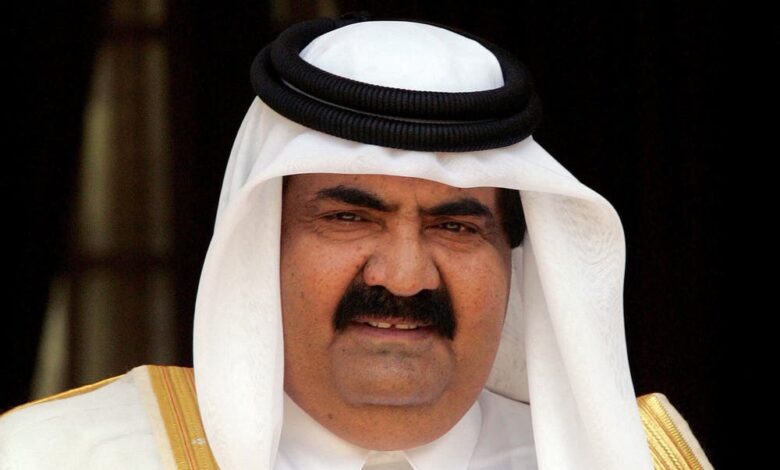
Qatar is mourning the death of its former ruler, whose leadership is widely credited with transforming the once relatively quiet Gulf nation into one of the world’s most influential countries. The former emir passed away at the age of 74, bringing to a close the life of a leader whose vision reshaped Qatar’s political, economic, and international standing over several decades.
News of his passing prompted an outpouring of tributes from world leaders, diplomats, regional governments, and international organizations, many of whom described him as one of the most consequential leaders in the modern history of the Middle East.
His death marks the end of an era that fundamentally altered Qatar’s place on the global stage. Under his leadership, the country evolved from a small energy-producing state into an influential diplomatic, economic, and media powerhouse with growing influence far beyond the Gulf region.
When he assumed leadership, Qatar was already blessed with abundant natural gas reserves, but few anticipated the scale of transformation that would follow. Through ambitious economic planning, infrastructure development, and strategic investments, the country rapidly emerged as one of the wealthiest nations in the world based on income per capita.
One of his defining achievements was the aggressive development of Qatar’s liquefied natural gas (LNG) industry. Massive investments in energy infrastructure positioned the country as one of the world’s leading exporters of natural gas, generating enormous revenues that financed national development and strengthened Qatar’s global economic influence.
Rather than relying solely on hydrocarbon exports, his administration pursued economic diversification by investing heavily in finance, aviation, education, healthcare, technology, tourism, sports, and real estate. This strategy helped reduce dependence on oil and gas while creating a more resilient national economy.
The former ruler also championed the establishment of institutions that would project Qatar’s influence internationally. During his reign, the country became increasingly active in diplomatic mediation, frequently hosting peace negotiations and facilitating dialogue between conflicting parties in different parts of the world.
Qatar gradually developed a reputation as a neutral venue for international diplomacy, welcoming leaders from diverse political backgrounds and playing important roles in regional conflict resolution.
Another landmark decision during his leadership was supporting the launch and expansion of Al Jazeera, the Doha-based international news network that transformed Arabic-language broadcasting and later became one of the world’s most recognizable media organizations.
The network significantly expanded Qatar’s global visibility and helped establish the country as an influential voice in international media.
His administration also invested heavily in education through partnerships with leading international universities, creating Education City in Doha as a hub for higher learning, research, and innovation.
Healthcare similarly received substantial attention, with modern hospitals, research centres, and medical facilities established to improve public health while positioning Qatar as a regional destination for advanced healthcare services.
Infrastructure development became another defining feature of his rule.
Modern highways, ports, airports, residential developments, business districts, and public facilities transformed the country’s physical landscape at an unprecedented pace.
The expansion of Hamad International Airport and Qatar Airways further strengthened the nation’s role as a major global aviation hub connecting Europe, Asia, Africa, and the Americas.
Perhaps one of the most internationally recognized outcomes of his long-term vision was Qatar’s successful bid to host the 2022 FIFA World Cup.
Although the tournament took place after he had stepped down from power, many observers acknowledged that the foundations for the historic event were laid during his leadership through sustained investment in infrastructure, international partnerships, and sports development.
In 2013, the former emir voluntarily abdicated the throne in favour of his son, making him one of the few Arab rulers in modern history to peacefully transfer power while still alive.
The decision surprised many international observers but was widely interpreted as an effort to ensure continuity, generational renewal, and stable leadership for the country.
Following his abdication, he largely withdrew from day-to-day governance while remaining a respected national figure whose influence continued to be felt through the institutions and policies established during his reign.
Throughout his leadership, however, his administration also attracted criticism from some international organizations and governments over issues including labour rights, political freedoms, and regional foreign policy.
Despite these criticisms, supporters argued that his leadership fundamentally transformed Qatar into a modern state with significant global influence despite its relatively small population and geographic size.
Political analysts describe his tenure as one of the most transformative periods experienced by any Gulf nation during the twenty-first century.
By combining strategic investment, diplomatic engagement, economic modernization, and long-term national planning, he positioned Qatar as an influential player in global affairs far beyond what many believed possible for a country of its size.
Tributes continued pouring in following confirmation of his death.
Leaders from across the Middle East praised his contributions to regional diplomacy, while international officials highlighted his role in strengthening global cooperation, energy security, and economic development.
Many also recognized his efforts to position Qatar as a bridge between different regions and cultures through dialogue, investment, humanitarian assistance, and international partnerships.
Within Qatar, citizens reflected on the remarkable transformation witnessed over the course of his leadership.
Entire generations experienced dramatic improvements in education, healthcare, infrastructure, employment opportunities, and living standards during the years he guided the country’s development.
His passing therefore represents not only the loss of a former head of state but also the departure of one of the principal architects of modern Qatar.
Historians believe his influence will continue to shape the country’s future for decades through the institutions, infrastructure, economic policies, and international relationships established under his leadership.
As Qatar enters a period of national mourning, many around the world are remembering a leader whose ambitious vision altered the trajectory of his nation, transforming a small Gulf state into one of the most recognizable and influential countries on the global stage.
His legacy, supporters say, will ultimately be measured not only by the wealth generated during his reign but also by the enduring institutions, international partnerships, and national confidence that continue to define modern Qatar.