

Fresh anxiety has gripped families of National Youth Service Corps (NYSC) members allegedly abducted along a major highway in Kogi State, following reports that the kidnappers are demanding N20 million for each corps member being held.
The reported ransom demand comes days after gunmen intercepted two buses travelling along the Aloma–Egane Expressway in Ofu Local Government Area of Kogi State, taking several passengers into the surrounding bush.
The incident reportedly occurred at about 4:40 p.m. on Wednesday, August 26, 2026, around Ogene Zaria, close to the Ogene Zaria–Onicha-Igo Junction.
The affected passengers were travelling after completing their three-week NYSC orientation programme in Bayelsa State.
Several of the corps members were reportedly heading towards Abuja, from where they were expected to continue to their various places of primary assignment.
The attack began when armed men reportedly emerged from the bush and intercepted vehicles using the route.
Two buses were affected during the operation, including a white Hummer bus operated by Peace Mass Transit and a yellow 18-seater bus.
The attackers reportedly forced some passengers out of the vehicles before taking them away into the bush.
The sudden attack created panic among the passengers and their relatives, many of whom only became aware of the situation after attempts to reach their loved ones failed.
A security operation was subsequently launched after a distress call was received.
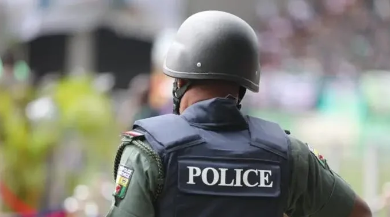
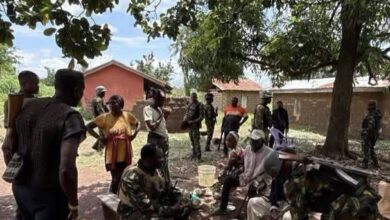
Police officers and other security personnel moved into the area and began searching the surrounding bushes.
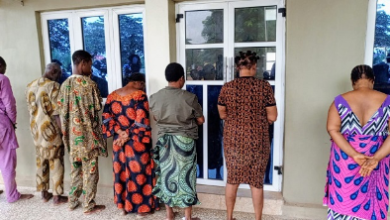
The operation resulted in the rescue of 11 victims, including the drivers of the two buses.
The successful rescue provided relief to some families, but uncertainty remained over the number of people still in captivity.
The reported N20 million ransom demand has now increased concerns among families of the remaining victims.
If the reported demand is applied to each abducted NYSC member, the financial burden on families could become enormous, particularly for relatives who may already be struggling to meet the costs associated with their children’s education and national service.
Families are now anxiously waiting for further information about the condition and location of those still missing.
The alleged ransom demand also highlights the increasing financial pressure placed on families during kidnapping incidents.
In many cases, relatives are forced to seek assistance from friends, community members, colleagues and other well-wishers when kidnappers demand large sums of money.
For families of young corps members, the situation can be especially distressing because many of the victims are graduates who had only recently begun their national service.
The affected corps members had reportedly completed their orientation exercise in Bayelsa and were travelling towards their assigned states when the attack occurred.
Some were reportedly expected to resume their primary assignments shortly after arriving at their destinations.
One of the affected corps members was reportedly posted to Niger State and had planned to stop in Abuja before continuing her journey.
The incident has therefore disrupted the transition from orientation to the next phase of the NYSC programme.
The reported ransom demand has also intensified calls for security agencies to increase efforts to locate the remaining victims.
The surrounding forests and isolated sections of the road are believed to provide potential hiding places for criminal groups operating in the area.
Security personnel are expected to continue intelligence gathering and searches aimed at determining where the abducted passengers were taken.
The operation must also be carefully handled because the safety of the hostages remains the immediate priority.
Investigators will need to establish the identities of the abductors, determine how they operated and identify the routes used to move the victims after the attack.
Information from the rescued passengers and drivers could prove useful in reconstructing the incident.
The recovered buses may also provide investigators with additional evidence about the attack.
Authorities are likely to examine the circumstances surrounding the interception of the vehicles and whether the attackers had prior knowledge of their movements.
The incident has renewed concerns about the safety of travellers along the Aloma–Egane road and other highways connecting communities across Kogi State.
The afternoon timing of the attack has particularly worried motorists, as it demonstrates that travellers can face risks even before nightfall.
The presence of surrounding vegetation can make it difficult for security personnel to monitor every section of a long highway.
Residents have consequently called for stronger patrols, improved intelligence networks and faster emergency responses along vulnerable routes.
The safety of NYSC members has also become a major concern because corps members regularly travel across states as part of their national service.
Many are unfamiliar with the routes they use and may have limited knowledge of areas considered vulnerable to criminal attacks.
Families therefore depend heavily on security agencies to protect young people travelling between orientation camps and their places of primary assignment.
The latest incident has also raised questions about whether corps members should receive additional security guidance or travel support when moving through high-risk areas.
While the reported N20 million ransom demand remains part of the developing situation, the priority for families and authorities is the safe recovery of everyone still missing.
Any negotiations or rescue operation must take into account the safety of the victims.
The rescue of 11 people demonstrates that coordinated security operations can produce results, but the reported demand suggests that the incident may not yet be fully resolved.
Families of the remaining victims continue to hope that security agencies will locate their loved ones and bring them home safely.
The incident has also revived the broader debate about kidnapping and ransom payments in Nigeria.
Large ransom demands can encourage criminal groups to continue targeting travellers, while families often find themselves caught between the financial demands of kidnappers and the need to protect their relatives.
For many families, the emotional cost is even greater than the financial burden.
The uncertainty surrounding the condition of a loved one can last for days or weeks, creating immense psychological pressure.
In the Kogi case, the victims were reportedly young Nigerians returning from an official national service programme.
Their families had expected them to proceed normally to their various places of assignment after completing their orientation.
Instead, the journey turned into a kidnapping crisis that has now attracted renewed security attention.
Authorities are expected to continue working to establish the exact number of people still missing and to trace those responsible for the attack.
The reported ransom demand will also form part of the developing investigation as security agencies seek to understand the demands being made by the kidnappers and the communication channels being used.
For now, the 11 rescued victims are safely out of captivity, while efforts continue to locate and secure the release of those who may still be held by the gunmen.
The situation remains closely watched by families, NYSC stakeholders and residents of Kogi State, with the safe return of the remaining victims remaining the immediate priority.